
Setting It Level · Viral Post Fact Check ·
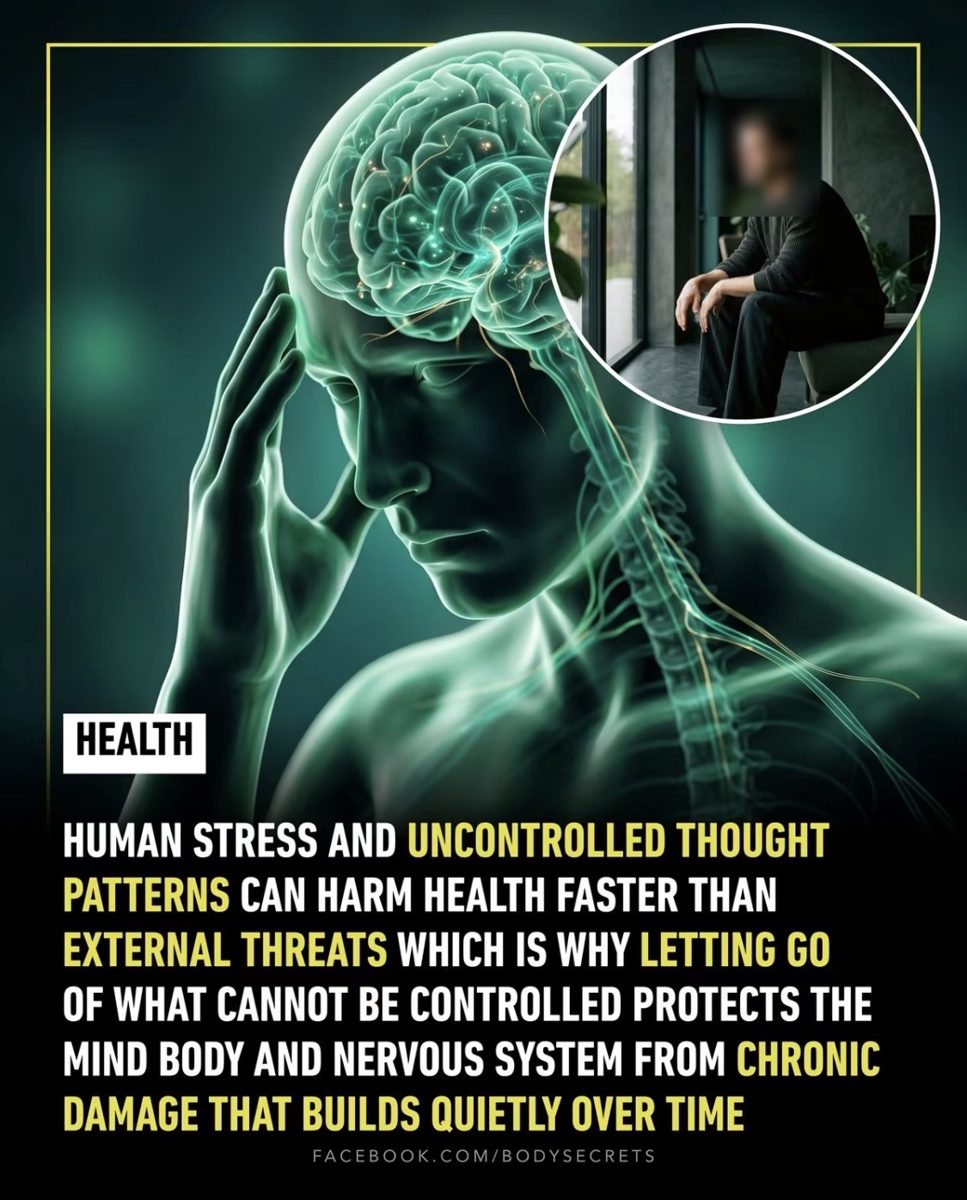
Human stress and uncontrolled thought patterns can harm health faster than external threats, which is why letting go of what cannot be controlled protects the mind, body and nervous system from chronic damage that builds quietly over time.
What We Found
Chronic stress really can wear on the body. Stress switches on the HPA axis and releases cortisol and adrenaline. That response is meant to shut off when the threat passes. When it stays on for months or years, it's linked to heart disease, high blood pressure, metabolic and immune problems, poor sleep, anxiety and depression. Researchers call this cumulative wear and tear "allostatic load."
Rumination and worry are part of it. A 2016 review of 60 studies found that worrying and ruminating were tied to higher blood pressure, heart rate and cortisol and lower heart-rate variability. The authors called this a possible pathway to long-term disease.
Acceptance-based skills can help. In healthy adults, mindfulness-based stress reduction moderately reduced stress, anxiety and depression. Meditation trials showed small to moderate benefits for anxiety and depression, but only low-strength evidence for stress itself. Acceptance and commitment therapy (ACT) beat waitlist, placebo and usual care in trials and performed about as well as CBT.
Faster than external threats" isn't supported. We found no research comparing the two, and the phrase has no clear meaning. Stress-related harm builds over years. For heart disease, adult work or life stress raises risk about 1.1 to 1.6 times, which is less than smoking, high blood pressure or high cholesterol.
Sources
- American Psychological Association, "Stress effects on the body" (opens in new tab)
- Mayo Clinic, "Chronic stress puts your health at risk" (opens in new tab)
- Harvard Health, "Understanding the stress response" (opens in new tab)
- McEwen BS (1998), "Stress, adaptation, and disease: Allostasis and allostatic load," Ann NY Acad Sci (opens in new tab)
- Kivimäki M & Steptoe A (2018), "Effects of stress on the development and progression of cardiovascular disease," Nat Rev Cardiol (opens in new tab)
- Ottaviani C et al. (2016), "Physiological concomitants of perseverative cognition," Psychological Bulletin (opens in new tab)
- Khoury B et al. (2015), "Mindfulness-based stress reduction for healthy individuals: A meta-analysis," J Psychosom Res (opens in new tab)
- Goyal M et al. (2014), "Meditation programs for psychological stress and well-being," JAMA Internal Medicine (opens in new tab)
- A-Tjak JGL et al. (2015), "A meta-analysis of the efficacy of acceptance and commitment therapy," Psychother Psychosom (opens in new tab)
- "Effects of mindfulness-based interventions on salivary cortisol in healthy adults: a meta-analytical review" (2016) (opens in new tab)
- O'Leary K et al. (2016), "A systematic review of the effects of mindfulness interventions on cortisol," J Health Psychol (opens in new tab)
We rate claims, not people. If we got something wrong, email [email protected].