
Setting It Level · Viral Post Fact Check ·
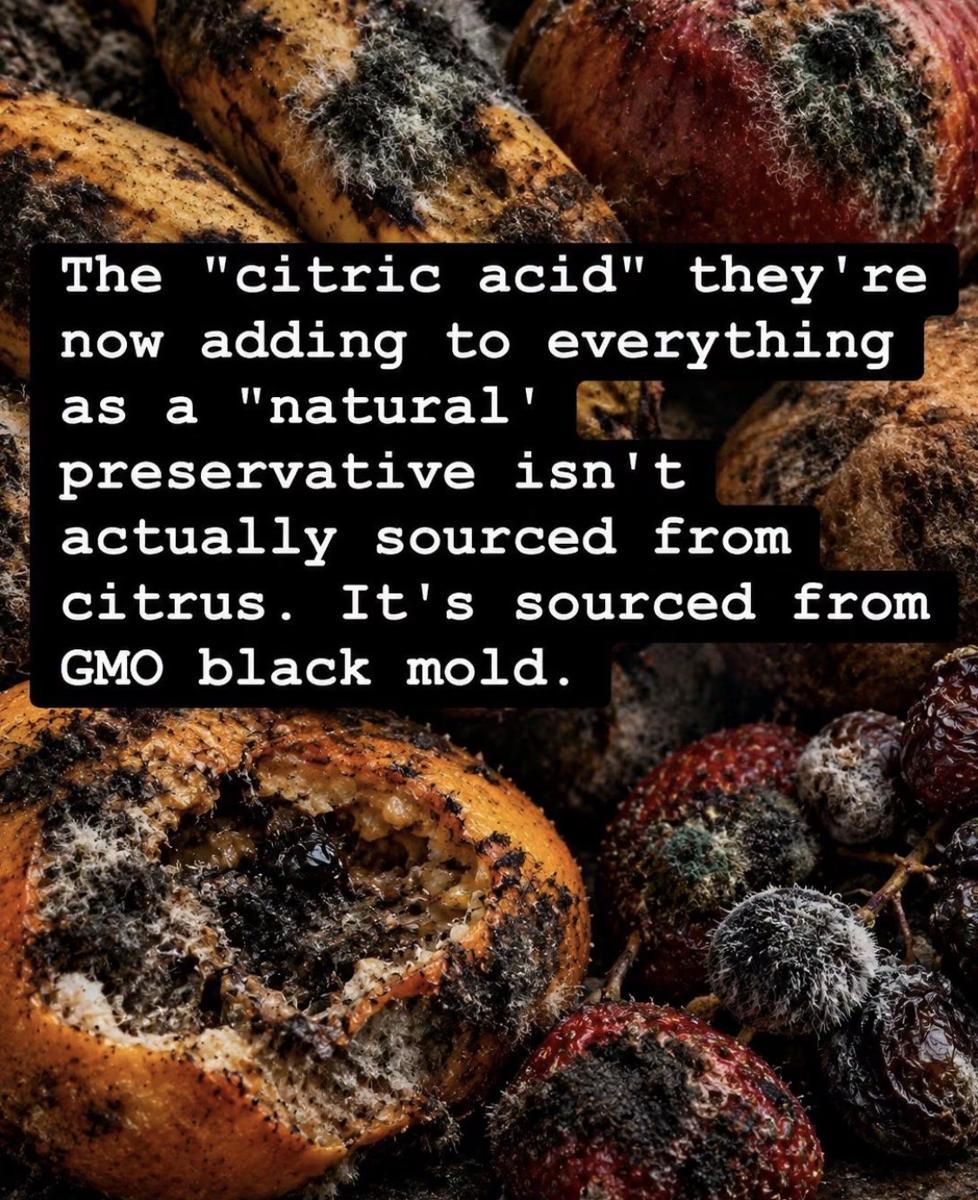
The 'citric acid' they're now adding to everything as a 'natural' preservative isn't actually sourced from citrus. It's sourced from GMO black mold.
What We Found
Made with mold: true. About 99% of citric acid is made by microbial fermentation, mostly by feeding sugar to the mold Aspergillus niger. A. niger is the "black mold" seen on onions; it isn't the "toxic black mold" (Stachybotrys) found in damp homes. Mold fermentation replaced lemons as the main source starting in 1919 (Pfizer in the U.S.; also Belgium).
GMO": usually not. A 2023 technical review for the USDA National Organic Program found most makers use wild strains or strains improved by classical mutation (UV or chemical exposure). It said genetic engineering of the mold "appears to remain in an experimental phase," though strain details are often proprietary. The sugar often comes from corn, which may be genetically modified. Under EU rules, citric acid made by a non-GM mold from GM corn isn't classed as a GMO. U.S. disclosure rules for highly refined ingredients are under review after a 2025 court ruling.
No mold in the bag: the mold is filtered out, and the acid is precipitated, purified and crystallized. The FDA lists citric acid as GRAS (21 CFR 184.1033), and the EU approves it as additive E330 with an intake limit "not specified."
"Now adding to everything": it's been made this way for about 100 years. When it's used as a preservative, U.S. labels must say so (for example "to preserve freshness"). The FDA has no formal definition of "natural."
Sources
- Max et al., "Biotechnological production of citric acid," Braz. J. Microbiol. (2010) (opens in new tab)
- USDA AMS / OMRI, Citric acid technical report (Dec. 2023) (opens in new tab)
- Pfizer history (1919) (opens in new tab)
- American Chemical Society, deep-tank fermentation landmark (opens in new tab)
- J. Ind. Microbiol. Biotechnol. review (2025) (opens in new tab)
- UC IPM, black mold of onion (A. niger) (opens in new tab)
- OMRI, GMOs as processing inputs (opens in new tab)
- Tate & Lyle citric acid GMO statement (opens in new tab)
- 21 CFR 184.1033 (opens in new tab)
- EU Regulation 2020/1419 (E330, ADI "not specified") (opens in new tab)
- 21 CFR 101.22 (preservative labeling) (opens in new tab)
- FDA, use of the term "natural" (opens in new tab)
- Sweis & Cressey, Toxicology Reports (2018) (opens in new tab)
- Wiley, Ninth Circuit ruling on the BE disclosure rule (Nov. 2025) (opens in new tab)
We rate claims, not people. If we got something wrong, email [email protected].