
Setting It Level · Viral Post Fact Check ·
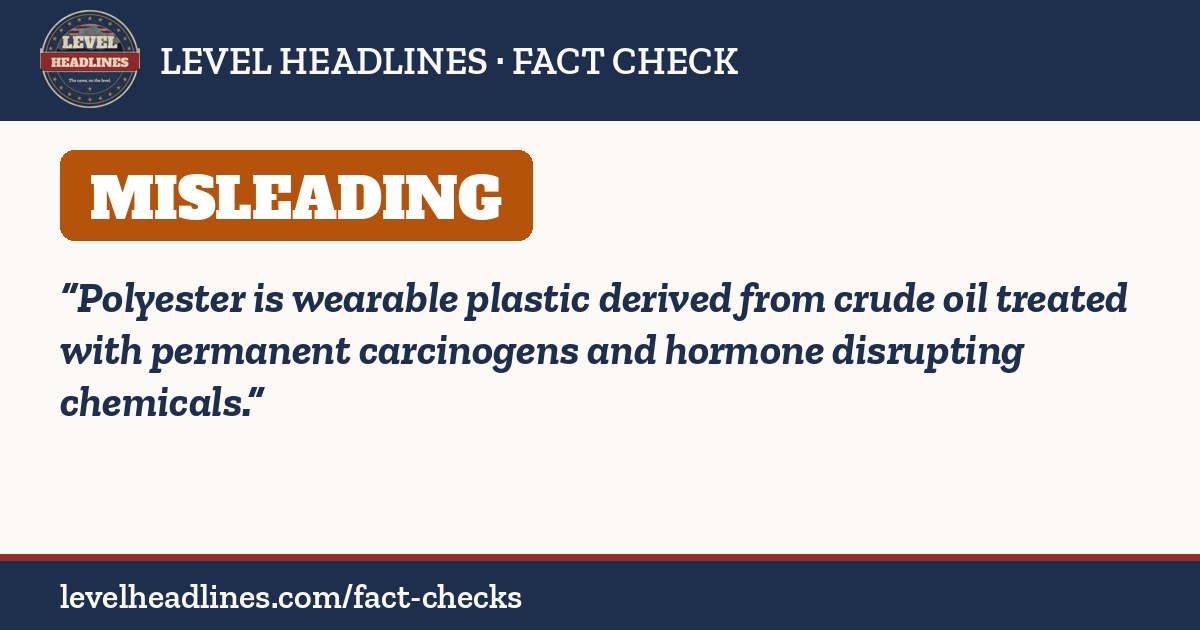
Polyester is wearable plastic derived from crude oil treated with permanent carcinogens and hormone disrupting chemicals.
What We Found
The first part is true. Most polyester is PET (polyethylene terephthalate), the same plastic family used in soda bottles, and the European Environment Agency notes synthetic fibers like polyester are made from oil and natural gas.
Antimony: most PET is made with an antimony catalyst, and traces remain in the fibers. In 2022, the WHO's cancer agency (IARC) classified trivalent antimony as "probably carcinogenic to humans" (Group 2A), with exposure mainly a workplace concern. A 2021 lab study found only about 0.05% to 2% of a fabric's antimony moved into artificial sweat, and washing before first wear reduced it.
BPA: it isn't an ingredient of polyester. But the Center for Environmental Health found BPA in some polyester-spandex socks and sportswear, and in 2024, 30 companies agreed to remove it from socks.
Microplastics: polyester does shed tiny fibers, especially in early washes, per the EEA.
Sources
- European Environment Agency, "Plastic in textiles" (opens in new tab)
- EEA, "Microplastics from textiles" (opens in new tab)
- IARC Monographs Vol. 131 (antimony) (opens in new tab)
- Biver, Turner & Filella, Regulatory Toxicology and Pharmacology (2021) (opens in new tab)
- Center for Environmental Health, BPA socks agreement (2024) (opens in new tab)
We rate claims, not people. If we got something wrong, email [email protected].