
Setting It Level · Viral Post Fact Check ·
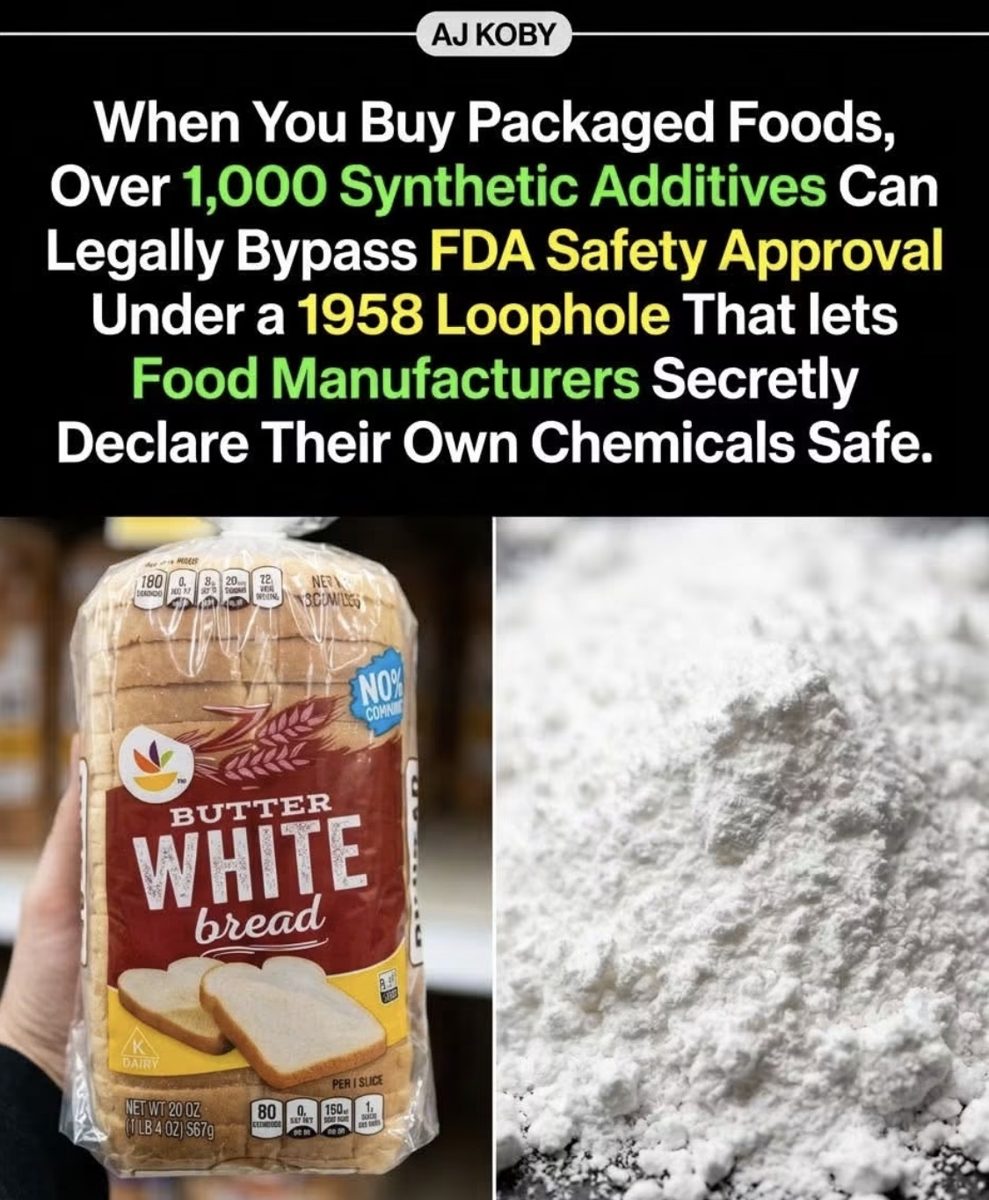
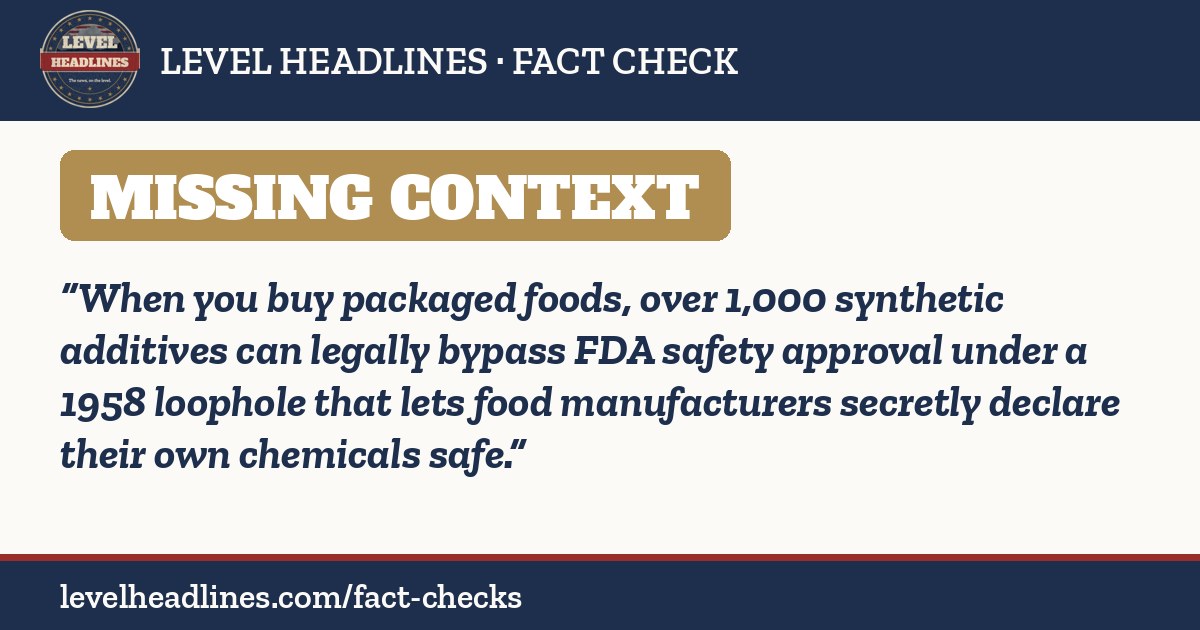
When you buy packaged foods, over 1,000 synthetic additives can legally bypass FDA safety approval under a 1958 loophole that lets food manufacturers secretly declare their own chemicals safe.
What We Found
The 1958 law is real. The Food Additives Amendment of 1958 required FDA pre-market approval for new food additives but exempted substances "generally recognized as safe" (GRAS) by qualified experts.
Secretly declare" is mostly accurate. A company can conclude on its own that an ingredient is GRAS and use it without telling FDA; notification is voluntary under the 2016 GRAS final rule (21 CFR 170.205). GAO (2010) found FDA can't ensure the safety of GRAS uses it isn't told about. The legal standard (21 CFR 170.30) still requires expert consensus based on generally available, usually published evidence; what's missing is FDA review.
Over 1,000" is an estimate. A Pew-funded, peer-reviewed analysis (Neltner et al., 2011) estimated about 1,000 GRAS substances never reported to FDA, and Pew's reports repeated that figure. EWG (2026) says "more than 1,000" may be in U.S. food. Nobody, including FDA, knows the exact number.
Synthetic" overstates it. Many GRAS substances are natural, such as plant extracts, flavors, fibers, salt and vinegar. The photos are generic stock images, not evidence about specific products.
Sources
- FDA, GRAS overview (opens in new tab)
- 21 CFR 170.30 (eCFR) (opens in new tab)
- 2016 GRAS final rule (81 FR 54960) (opens in new tab)
- GAO-10-246 (2010) (opens in new tab)
- Neltner et al., 2011 (opens in new tab)
- Pew Charitable Trusts, Fixing the Oversight of Chemicals Added to Our Food (Nov. 2013) (opens in new tab)
- EWG, "Secret GRAS" (2026) (opens in new tab)
- HHS, Mar. 10, 2025 (opens in new tab)
- FDA proposed rule, Aug. 2026 (91 FR 51834) (opens in new tab)
- CSPI on the proposed rule (opens in new tab)
We rate claims, not people. If we got something wrong, email [email protected].